

Frequently Asked Questions
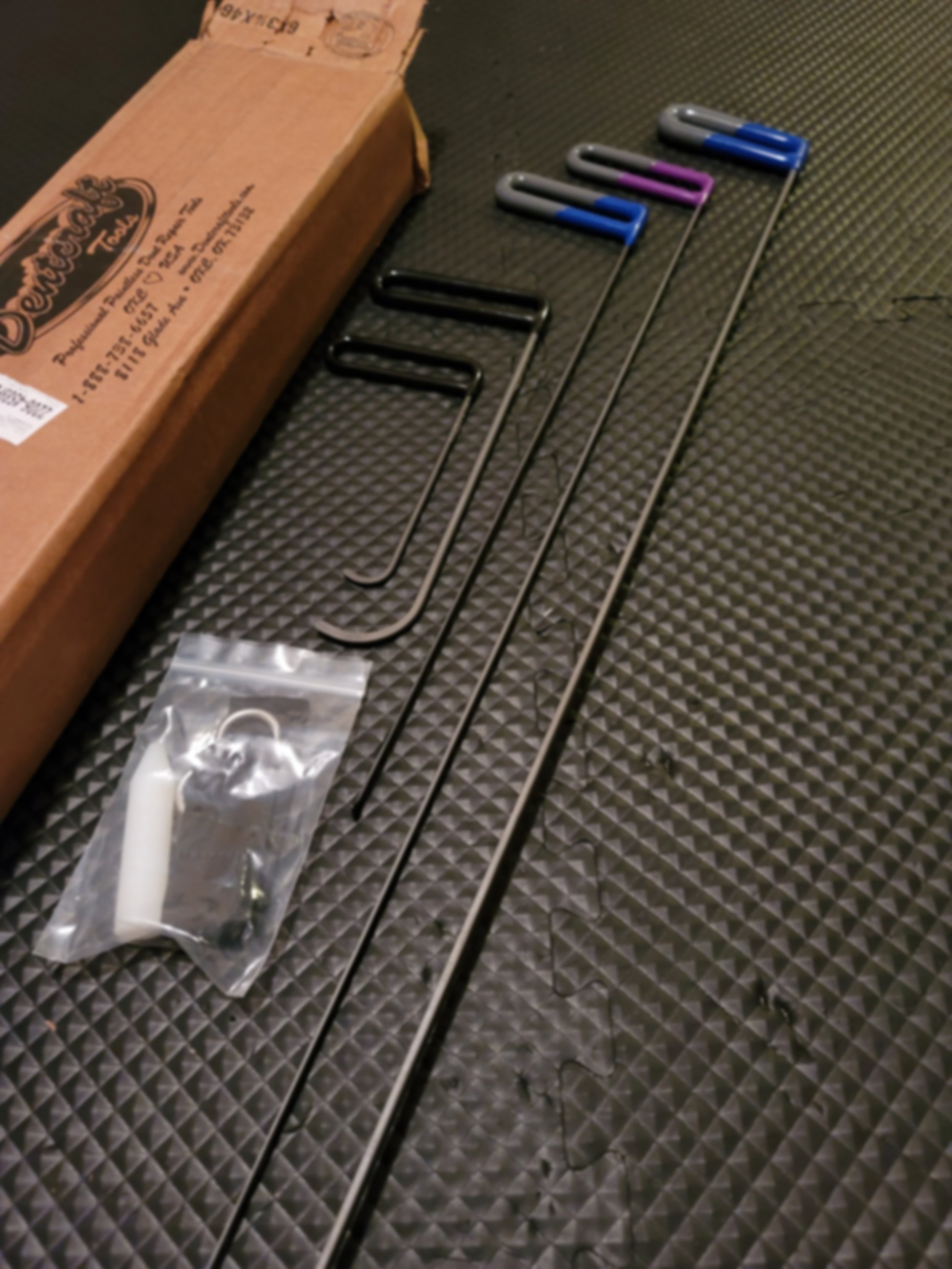
Paintless Dent Removal
What is Paintless Dent REmoval???
Paintless Dent Removal, also known as “Paintless Dent Repair” or PDR for short, is a Highly Skilled way of Pushing Smoothing Dents out of metal without the Use of Paint. Traditionally the only way to fix dents was through a body shop, by grinding off paint, so that a stud could be welded and and the metal pulled out. But Decades ago, high Class OEM manufacturers like Mercedes employed skilled laborers to “Spoon” or “push up” low spots in metal panels, at the end of the assembly line. Decades ago, PDR was a highly guarded and secretive art form; but as the Secret got out, “Dent technicians” began popping up all over. The learning curve is High, and Skill and talent is dependant upon the practicioner performing the Repair. There are many ways to perform PDR, but it is an Art Form that is constantly and consistantly evolving.
What Does the term “Paintless” mean?
The Term “Paintless” refers to the “Absence” or “Lack of” Paint being used in the Repair of Dents. Traditionally Bodyshops would grind off paint or use body filler to fix low spots in panels. The term “Paint-Less” is a Made-up word and often a “Miss-Nomer” as most customers tend to hear the Word “Paint” Prominantly more than the latter “less”; assuming that there is some sort of paint involved in repairs, when there absolutely is not.
Is there a How-To for PDR? Can i Do it myself?
There is no exact Manufacturer “How to” remove dents from specified Makes and models. Each Vehicle Manufacturer makes cars slightly different, and uses different gauges, alloys, and types of metal or materials in their vehicles. Some Cars change year to year, and what worked for a previous model may not be useful for a newer model. Much of PDR comes from the experience of the Technicians and understanding how cars are built. And many times it is Trial and Error, as PDR is as much “problem solving” as it is “art form”.
Will my Paint be Damaged
During the PDR process we try to avoid Paint Damage above all, but there are many Risks involved. Some Vehicles have less flexible paint than others; for instance Dodge/Jeep/Ram Vehicles are 3x more lightly to have paint crack during repairs, Even when every precaution is taken. Kia/Hyundai vehicles can sometimes develop rust and paint issues Underneath the Factory paint, causing it to flake off over time, or even pop right off during Glue Pulling. The likelyhood of damage, depends on the health of the vehicles clearcoat, excessively swirled, scratched, and even dried out clear coat can crack during even the gentlest push repairs. And dents with Already Damaged paint or surrounding paint cracks can get worse with the movement of metal.
Detailing/Restoration Services Explainations
Do we offer Interior Detailing?
Unfortunately we do not offer Interior Detailing Services, as there is too much of a varience with owner maintanence of car interiors; between Pet hair, smoke stains, and destructive children as we have seen with working with the used car market.
Why is it Called Maintaining?
It is called Detailing, but cleaning is essential to taking care of a car’s exterior. Without regular cleaning and protection, a clear coat can rapidly dry out and succumb to sun damage or other toxic contaminants clinging to its surface. Scientific studies have also shown that clean cars slip through the air with less drag than dirty car exteriors. Protecting during Every wash is very important, as every wash is risking swirls, it is a waste of effort to wash without adding protection everytime. Maintaining a protective layer on a vehicle will greatly reduce the need and frequency of washes, thus limiting the risk of scratching, removing, or needlessly stripping clearcoat with unnecessary washing.
What makes a car shine more?
Clearcoat is made of a Plastic like coating, similar to the bottom of a Compact disc or DVD, it is a clear layer that can easily become marred with swirls or scratches. Much like when a CD or DVD is wiped with the improper type of cloth, a car’s clearcoat can quickly become scratched, and all the microscopic scratches add up, making an uneven surface that can no-longer directly mirror surroundings because of the light bouncing randomly off the many peaks and valleys of each scratch. a great shine requires a smooth flat surface.
What is a 2 Bucket Wash???
A proffessional 2 Bucket wash is a single Panel at a time hand Wash, that greatly reduces the risks of scratches; using one bucket for soap, and a second bucket to rinse the wash cloth after each panel. Grates are used at the bottom of both buckets to keep the wash cloth from coming into contact with the heavier particles of dirt and debris accumulating at the bottom of each bucket while washing a dirty vehicle. A 2 bucket method ensures that contaminants are more likely to stay at the bottom of the rinse bucket and far less likely to be dragged across the delicate clear coat, as the wash cloth is soaped up in the clean soap bucket. Whenever Possible, a Car should be hand washed and automated washed avoided.
What does Hydrophobic mean?
The term Hydrophobic applies to a surfaces Ability to “shed Water” like a duck’s feathers. Ceramic Coatings and Some Vinyls are Very Hydrophobic, and when clean, water has a very hard time clinging to them. A hydrophobic Surface will “bead” Water very well and stay cleaner due to the fact that water cannot cling to it; Since water cannot cling, dirt cannot be trapped by the water and allowed to stick to the car. There is still a chance for hydrophobic surfaces of a car to become dirty, but it tends to take longer. Hydrophobic surfaces also Clean Quicker with less effort; just like water, so does dirt and debris have a harder time sticking to hydrophobic surfaces, and when they do, they tend to roll right back off during the next spraying or even rain storm.
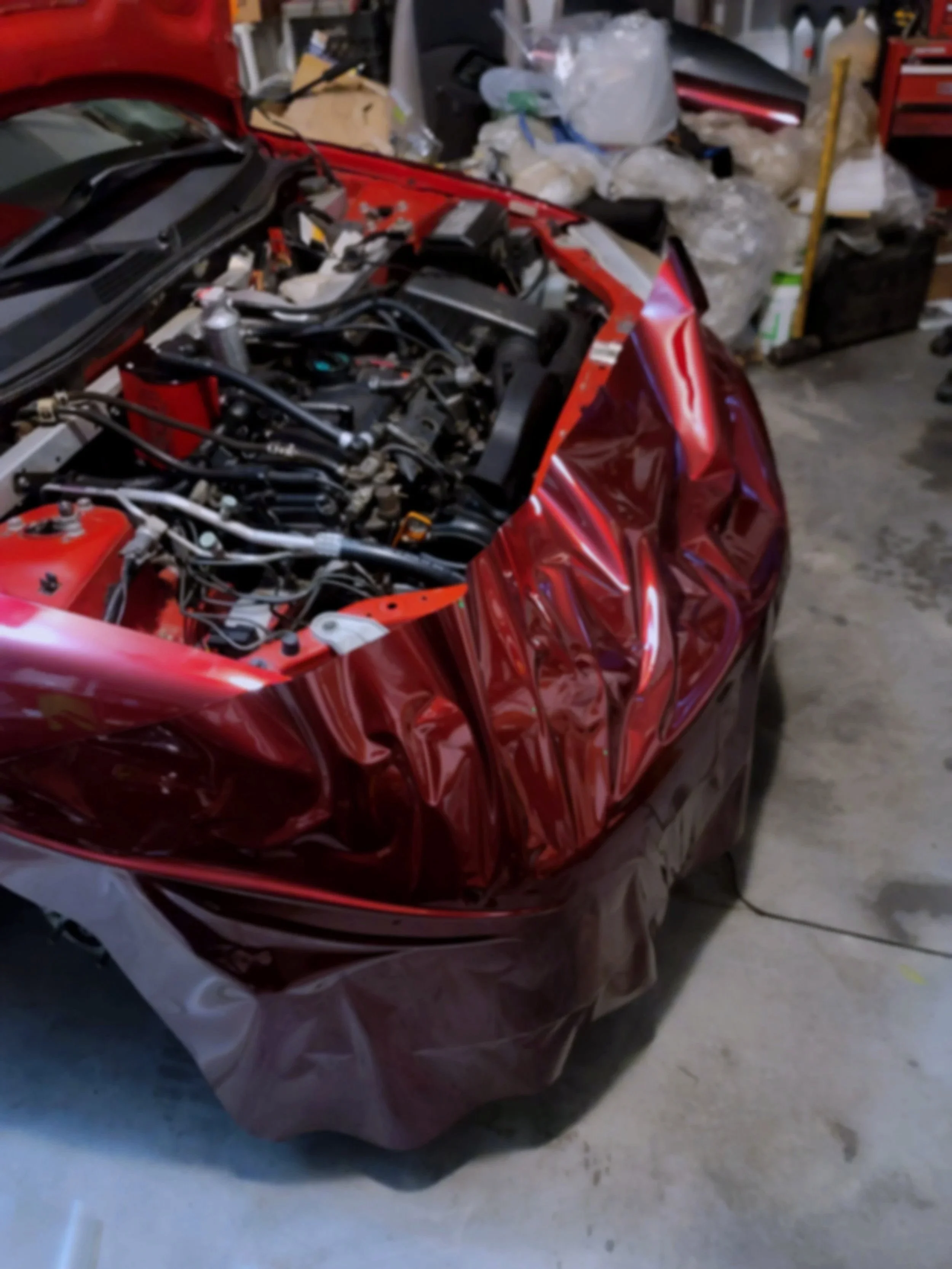
Vinyl Explained
What is a Vinyl Wrap?
Vinyl is essential a Large, Heavy duty, and durable “Sticker”, specifically polyvinyl chloride (PVC), used to make everything from records to building materials. It can be Printed on and comes in a wide variety of color options; such as color change, metallic, and matte finishes. It comes in Very large Rolls and Large sheets can be cut and applied to cars, walls, and most other smooth clean surfaces. It is Strong, Durable, stretchable, and high tech with features like Hydrophobic coatings and Air release technology for ease of installation. It has a outdoor service life of 2 to 5 years, after which it can become dry, brittle, and prone to flaking and cracking; which can make it very time consuming and difficult to remove.
What is the Difference between 3M, Vinyl Frog, and varieties of other?
there are two types of vinyls, cast and calendared; both have PVC in them, but Cast is thinner, while Calendared is thicker. Avery Dennison produces both Cast and Calendared vinyls, but tends to be far more forgiving to work with and place when wrapping. While Vinyl Frog is a popular chinese vinyl that is often found at the tops of Google Search pages with its super glossy and vibrant color options; But it is a thicker and less forgiving vinyl to work with, harder to place with high initial adhesion, and tends to trap more air pockets suddenly. Avery Dennison requires heat for it to fully adhere to a surface, making it far easy to use when wrapping any surface. But Vinyl Frog being a thicker vinyl is said to last for upto 5years. All vinyls have slightly different characteristics, and understanding each one is the key to a good wrap outcome.
Why does Vinyl wrapping Cost so much?!
First off, Material cost; one 5feet x 50feet vinyl roll can cost upwards of $500, and to make one mistake in any panel can result in having to scrap 10% of that roll to start all over again with a new sheet per that panel. Vinyl can be heated and stretched, to unwrinkle and smooth over different bodylines and valleys, but it can only stretch so much, and a rip, tear, or burned hole in one spot can compromise the entire panel, costing $50 to $100 of material to be scrapped. Then there is the Anxiety of committing to a panel, once the backing is peeled and the adhesive exposed; any dust, debris, or other contanimanents can quickly stick to the film backing and show under wrap. And it may take multiple lifts and re-positions to properly and smoothly apply any one panel; each lift of the vinyl exposes the adhesive to more dust and debris. Vinyl wrapping can take anywhere from 1 to 2hours or more per a panel, and when u factor than most cars have atleast 14 panels or more; a full wrap is nearly a 30hour job!
Will Vinyl wrapping my Car damage my Paint?
It could, if your paint is already flaking, coming off, or compromised in its adhesion to its primer (such as kia/hyundai). The adhesive side of Vinyl film has Very high tension and can pull clear coat Right up, when repositioning. The best way to deal with flaking clearcoat is to sand and spray primer and sand again to smooth, because Primer has a very strong bond, its a sure way to make sure the vinyl will stick to the vehicle, rather than pulling the clear coat and developing air pockets under the wrap; as air pockets will expand with the head of the sun and outdoors. If vinyl is not removed before it’s service life and is allowed to deteriorate, it can bond with old paint to an extent where it can take hours to meticulously remove, during this excessive removal the paint could become damaged.
How do i protect my Vinyl Wrap?
Ceramic Coating your vinyl Wrap can greatly extend the service life of your vinyl wrapping. Ceramic adds to vinyl’s hydrophobic properties and decreases heat transfer speed. Heat can stretch and cause vinyl to shrink; causing even more tension, and raising the potential for it to tear, lift, or crack as it ages. Not all Vinyls can be Waxed, so Ceramic coating or a specified spray for vinyl is best.
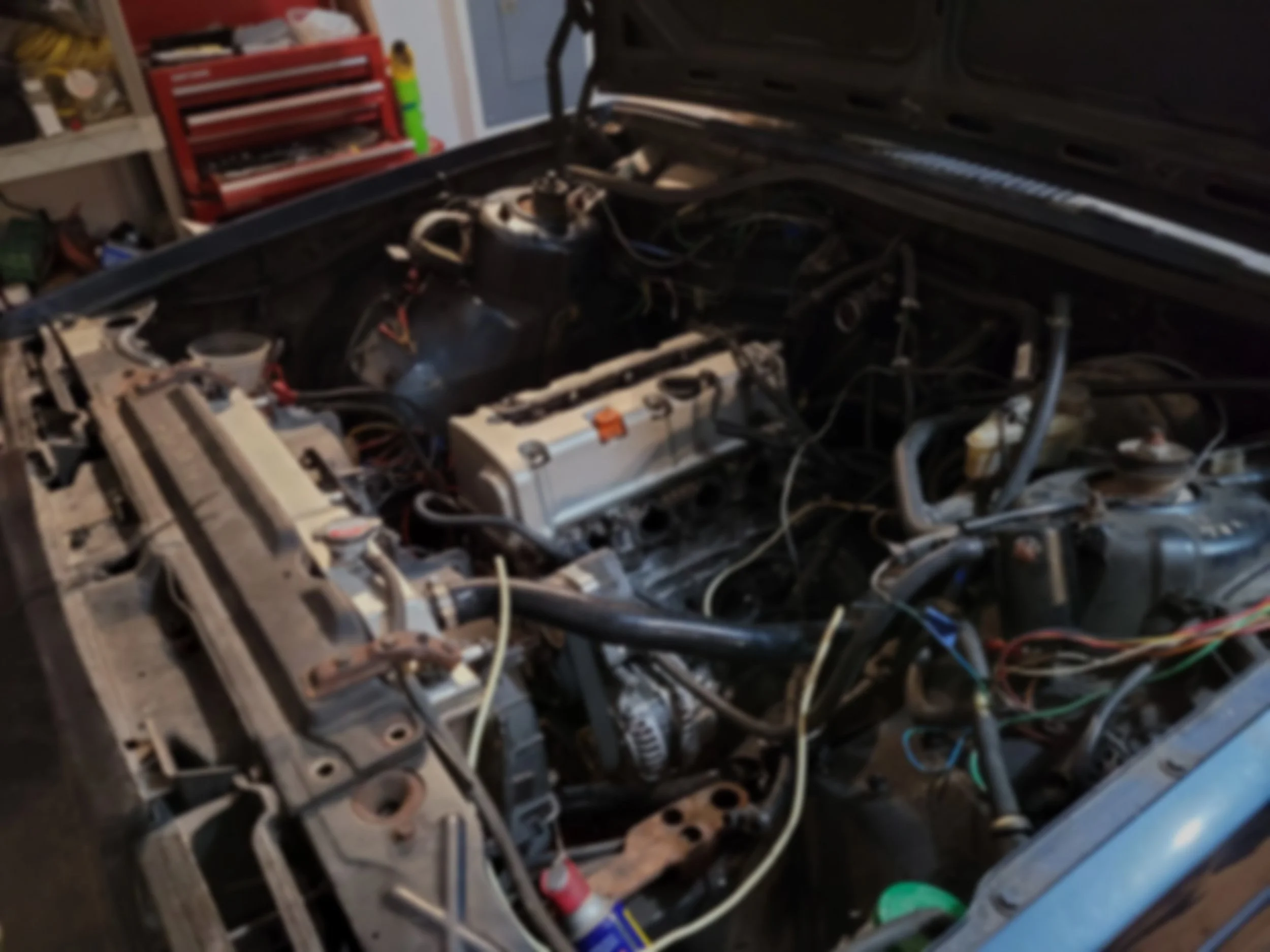
Honda K-Series Engines and Kswaps Deep Dive
What is a K-Series Engine?!
The Term K-series refers to a Family of Honda inline 4cylinder Engines developed from 2000 and used in Honda vehicles up until around 2016, where Earth Dreams replaced the standard “K-series” engine. Earth Dreams is derived from K-series, being its replacement, but is Not as durable as the original Kseries; much like how K-series replaced the Legendary B-Series family of Honda 4cylinder engines. Honda Engines follow a Letter coding, with each new variant getting a new later alphabetical number to designate the next newer development.
Honda K-series came after Honda F-series and are closer to the F-series “compact” found in the S2000, sharing some features like a Metal Timing chain that can last the life of the vehicle, but recieving less durability like smaller bearing journals than B-series and S2000 F-series compact. The K-series does however have Variable Timing Control, which allows to control of the intake cam timing; adjusting it on the fly, reliably using oil pressure, which allows these engines to accelerate quicker from a dig than B-series and F-series by allowing intake valve overlap to avoid pumping loss at low RPM.
They have a bottom Girdle only surpassed in strength by the s2000’s F-Series compact, and have some of the best flowing heads that Honda has ever designed. And some Varients Have VTEC, but even the lesser I-Vtec models can be quite impressive with a Turbo, capable of making upwards of 700hp with 30psi of boost and ethonal fuels.
Honda K-series engines became Honda’s Go-to power plant for most of its entire line up early in the 2000’s. K-series engines can be found in 02 CRV, 03 RSX, 04 Accord, Civic Si, Element, TSX, and Turbo Varient in RDX; though the RDX is slightly different and may not be viable for most “Kswaps”. much like B-series; K-series engines come in 2 sizes, small and large. The smaller being the 2.0 K20, and the larger 2.4 K24; and just like the B-series, can be combined with the higher flowing K20 heads on larger displacement K24 blocks, to create the monsterous “frankentein” combo, capable of 300hp NA!
What does it take to Kswap a car?
Motor mounts, wiring, tunable ECU, and Axels in the case of FWD Kswaps. There will also be a need for a Fuel Pressure Regulator, as Kseres dont have fuel return lines in the engine bay, but instead return fuel in the fuel tank.
Why is it so expensive?
for some Vehicles, its the Wiring; setting up a relay to power the kseries, or finding a good Hondata Kpro ECU can be tricky; and expensive nowdays, with the ECU alone being $1300. for other swaps like the RWD kswaps, there is the added cost of an Adapter Plate kit, which can be nearly $1000, and finding a good transmission and properly lengthening the drive-shaft. the experimental idea of creating a RWD from a FWD, gets even more expensive, with relocating the fuel tank and creating a trans tunnel, while the parts from S1-Built to mount a rear differential and axels are easily $4500...
Is Kswapping a car worth it?
After Daily Driving Kswapped Insights, and now a RWD Kswap, I can 200% assure you, Yes! they are very efficient, powerful, and simple. they easily fit even the smaller engine bays, and the K24 can easily make stock V6 Power with bolt ones and proper set up; while being cheap to source and widely available. Having a FWD Kswap is pure nuts, and the only thing u will wish for is being able to drift, which can be had with a RWD Kswap. The linear power curves and every day starting reliability, make for rock solid and extremely fun daily drivers. Once you Kswap, u will never want to go back!